
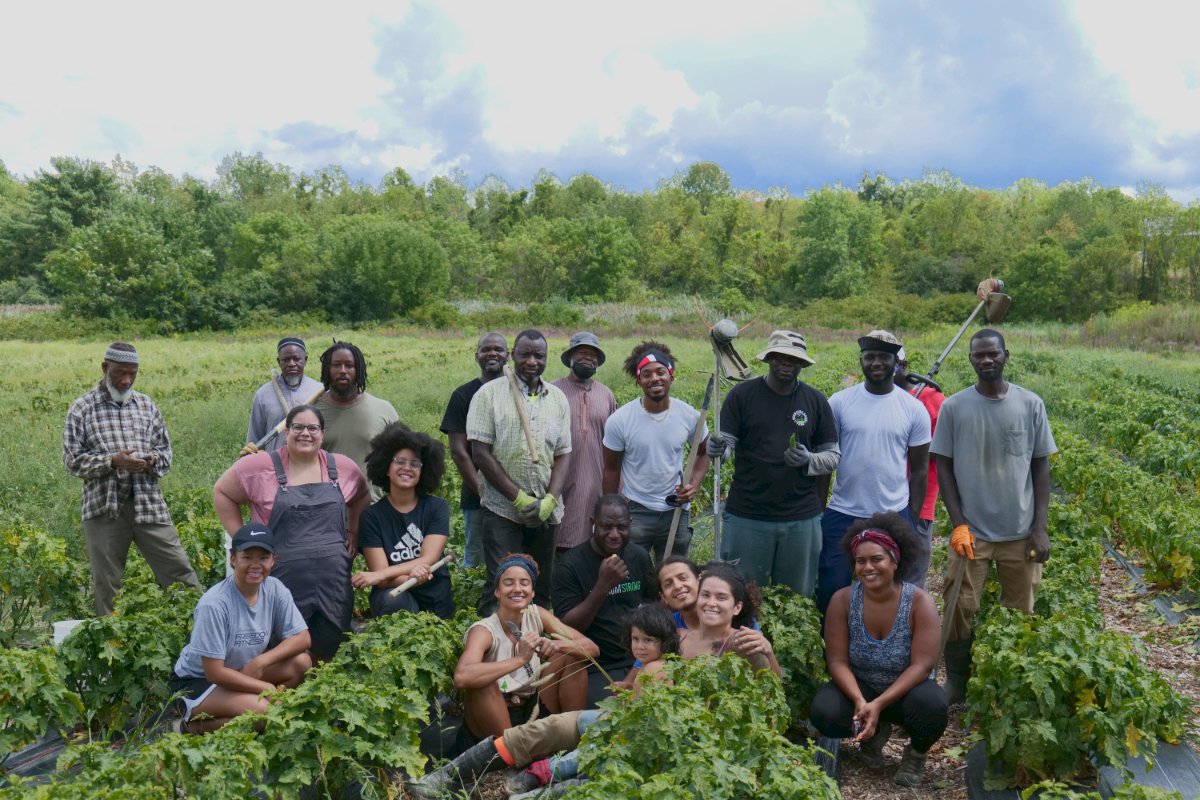
Rooting Resilience: Supporting Black Farmers in Texas Amid Structural Hostility
Executive Summary
In Texas, Black farmers face a legacy of land loss, program exclusion and economic disadvantage. While the state has the largest number of Black farm producers of any U.S. state, these farmers remain a tiny fraction of all producers, hold minimal land, and face institutions that often act as barriers rather than supports. In the current federal and state environment—where race-targeted support is being reduced and “race-neutral” policy is ascending—Black farmers are at heightened risk of further marginalization. This white paper outlines the history, presents recent data, argues why “Black” in this context is better understood as culture and heritage rather than simply a racial category, and proposes a set of concrete actions for TPPI, community allies and policy makers to support Black farming in Texas.
Background: Black Farmers in TexasHistorical context
- After Emancipation, many African Americans in Texas sought to own and farm land. For example, the couple Ransom Williams and Sarah Williams acquired 45 acres near Manchaca, Texas, in 1871 and farmed that land into the early twentieth century. Texas Beyond History
- From about 1900 to 1940, in Texas the majority of African American Texans remained in farming—but only about 20% of those farmers owned their land; the rest rented or were tenants. Texas State Historical Association
- By the 1980s, Black farmers in Texas and across the U.S. were being foreclosed in large numbers. One study found that in the early 1980s Texas alone saw 173 farm foreclosures a week, many of them involving Black-owned farms. People's History in Texas
- The federal agency United States Department of Agriculture (USDA) has itself acknowledged a long history of discrimination against Black farmers, including being denied loans, technical assistance, disaster payments, and other supports. The Equation
- According to the 2017 U.S. Census of Agriculture, Texas had 11,741 Black producers (farmers or ranchers) — the highest number of any state. The Counter
- In Texas, Black producers represented approximately 3% of all producers in the state. USDA NASS
- The 2022 Census of Agriculture reports that for the U.S., farms with at least one Black producer declined 13% between 2017 and 2022 (from 32,910 farms to 28,723). NSAC
- In 2023 the USDA’s Farm Service Agency reported that in Texas there were 420 loans to “socially disadvantaged” (which includes Black) farmers, totaling about $58 million. Washington Examiner
- Despite these numbers, the land ownership, size of operation and access to institutional support for Black farmers remain far behind white farmers. For example, one article notes that Black-run farms in Texas are on average 300 acres smaller than the average U.S. farm. Dallas News
- Black farmers often faced heirs’ property issues (no formal wills or titles passed through generations), which made them ineligible for many USDA programs. EIU Scholars
- County-level USDA decision-making structures (such as local loan committees) were often dominated by white farmers or white officials, making access and fairness difficult for Black farmers. ABC13 Houston
- Programs that are “race-neutral” but size- or acreage-based give advantage to large, established farms (most white) and disadvantage smaller or newer farms (many Black). This creates a structural gap even when explicit racial language is removed.
- When federal relief programs (for example during trade disruptions under the Trump administration) were designed, many of the fastest funds went to large commodity producers rather than smaller historically excluded farmers. In Texas this translated into Black farmers receiving far less than white counterparts. texasobserver.org
It is important to understand that when we talk about “Black farmers” in this context, we are referencing a cultural and historical lineage, not simply a demographic box. Here’s what that means in the Texas context:
- The farming traditions of African Americans in Texas emerge from the legacy of enslaved people, sharecroppers, tenant farmers, and later land-owning small farmers. This heritage involves knowledge of land, community ties, and collective resistance to exclusion.
- Recognizing “Black” as culture means emphasizing shared history of exclusion (credit denial, land loss, program exclusion) and a shared strategy of resilience (cooperatives, collective organizing, heritage-based agriculture).
- By framing it as culture, the conversation shifts from “special treatment” to “historic justice” and “economic equity” for a community that built and maintained agricultural systems under duress.
- This cultural framing also strengthens alliances among Black farmers, urban food-justice actors, and community-based organizations (churches, HBCUs, cooperatives) who share values around food sovereignty, land retention, and community wealth.
- Importantly, when programs shift to “race-neutral,” the cultural dimension helps maintain visibility and advocacy for those farmers who have been structurally disadvantaged, rather than being invisible in a “merit only” scheme that advantages those already advantaged.
- USDA and other federal agencies are increasingly moving away from race-based criteria or targeting for historically excluded farmers. That means the design of future supports may skip the legacy dimension, leaving Black farmers behind. (See news item: USDA ended race/sex consideration in many programs in 2025.) Reuters
- Many Black farmers in Texas continue to wait for justice from past discrimination. For instance, outreach shows the state’s Black farmers are “waiting for a cash crop” and remain undercapitalized. CBS News
- The decline in number of farms with Black producers (nationally and in Texas) indicates that the farming pipeline is shrinking for Black communities — younger generations are less likely to keep or acquire farms because of barriers. NSAC
- In Texas, as elsewhere, the average size and profitability of Black-run farms tends to be smaller and weaker, which means when market shocks hit (weather, input prices, disease) they have less buffer.
- Land retention remains a major issue. Without formal wills, clear title or capital reserves many Black farming families in Texas are vulnerable to tax sale, foreclosure, or land being fragmented.
- There is a risk of further concentration of support (subsidies, loans, markets) into large operations — often white-owned — while smaller, historically excluded farms are squeezed. If no corrective action is taken, Black farmers in Texas may continue to lose ground.
Here are actions TPPI and allied organizations can pursue to support Black farmers in Texas.
- Strengthen farmer network and collective infrastructure
- Create or support a Texas Black Farmers Network (TBFN) to link Black producers across regions, share best practices, aggregate products, coordinate access to markets, and build collective bargaining power.
- Develop cooperative marketing ventures (for example, Black-farmer aggregated boxes, shared distribution trucks) so that small producers can scale up and access institutional buyers (schools, hospitals, grocery chains).
- Assist in land-retention services: help with wills, heirs’ property education, title clearing, and monitoring for tax sale risk.
- Provide business training for smaller Black farms: bookkeeping, grant/loan writing, value-added processing, branding rooted in cultural heritage.
- Use culturally-grounded market channels
- Create farmer-markets, mobile markets and CSA (community supported agriculture) programs that prioritize Black-owned farms and target urban Black communities in Texas (Austin, Houston, Dallas, San Antonio).
- Partner with community institutions (churches, HBCUs such as Prairie View A&M University, fraternities/sororities) to guarantee purchase contracts or shared-farm shares.
- Encourage neighborhood grocery stores and co-ops in underserved areas to source from Black farmers — this supports local food-economies and keeps dollars circulating within the community.
- Develop cultural marketing around “Black Texas farms” as heritage-based producers — emphasize value (heritage, sustainability, community) not just commodity.
- Policy & advocacy
- Urge the USDA and Texas state agriculture agencies to re-establish or preserve “socially disadvantaged” or equivalent criteria in loan/grant programs, with explicit acknowledgement of legacy discrimination and targeted set-asides for Black producers.
- Advocate for state legislation in Texas that provides matching grants or low-interest loans specifically for Black and other historically excluded farmers with documentation of generational exclusion.
- Push for full transparency and disaggregation of data by race/culture and farm size/scale, so that inequities are visible and measurable.
- Monitor any “race-neutral” policy shifts and insist on racial-impact statements: even if policy says “race-neutral,” institutions must demonstrate it does not worsen outcomes for Black producers.
- Work with legal organizations to reopen windows for discrimination claims (similar to national suits like Pigford v. Glickman) at the state level, or to ensure enforcement of existing settlements.
- Funding and investment
- Build a Texas Black Land Retention Fund dedicated to helping Black farmers keep land — e.g., paying off property-tax arrears, providing bridge loans, assisting with heirs’ property consolidation.
- Secure grants and philanthropic investment specifically earmarked for Black-owned farms (for equipment, infrastructure, cold storage, processing, marketing).
- Encourage community investment vehicles: bonds, impact-investing funds that support Black farm infrastructure.
- Education & narrative change
- Develop educational materials and storytelling campaigns that centre the history of Black farming in Texas — from Reconstruction through Jim Crow, land loss, cooperative strategies, to current resurgence efforts. This supports public awareness and builds political will.
- Engage youth and new farmers — create mentorship programmes linking legacy Black farmers with younger generations willing to farm, focusing on culture, land stewardship, and community leadership.
- Frame Black farming not as a “charity case” but as a vital part of Texas agriculture — food sovereignty, community wealth, heritage economy.
- Equity and justice: decades of documented discrimination mean that without targeted support we remain complicit in continued exclusion.
- Food sovereignty and community health: Black-owned farms are often in regions and markets that mainstream agriculture overlooks; supporting them improves access to culturally relevant, nutritious food in Black communities.
- Wealth-building and land retention: farmland is generational wealth. If Black Texans lose farms at disproportionate rates, the racial wealth gap widens further.
- Cultural legacy: farming traditions tie into Black history in Texas, community resilience, and land justice. Recognising this fosters pride, intergenerational continuity and stronger rural-urban linkages.
- Issue a call to establish the Texas Black Farmers Network (TBFN) and seed it with an initial grant, membership drive and steering committee drawn from Black farmers, rural community organizations, Black land-justice groups and relevant academic partners.
- Draft policy briefs for the Texas Legislature and USDA region office advocating for targeted support for Black farmers, heirs’ property protections and expansion of culturally grounded markets.
- Produce a public education campaign (“Black Farms, Texas Roots”) including short films, interactive map of Black farms in Texas, and tie-in with TPPI’s larger work on racial equity and economic justice.
- Host a convening or summit bringing together Black farmers, community-food organisers, state officials and policy advocates to map a 5-year action plan for Black farming in Texas.
- Monitor data annually: track number of Black producers, land acreage, loan/grant access, farm size, revenues, and market access — publish a “State of Black Farming in Texas” dashboard.
The story of Black farmers in Texas is one of resilience, heritage and persistent exclusion. While the numbers show a reduction in both farms and land-access for Black producers, the cultural and economic case for supporting Black farming is strong and urgent. In a climate where policy is becoming more “neutral” and less attentive to historic exclusion, proactive support is essential. For TPPI and its partners, this is both a moral imperative and a strategic opportunity to build economic power, food justice and land retention in Black communities across Texas.